November 11-15th
Mani Drubchen Retreat and Chenrezig Empowerment
with Drupon Thinley Ningpo Rinpoche, Drupon Rinchen Dorje Rinpoche, Lopon Lama Kalsang, Tsunma Rinchen Khandro, and Virginia Blum
In- Person and Online
Registeration is required to attend
The Mani Drubchen Practice Retreat offers a rare and precious opportunity to receive powerful blessings through an authentic lineage. This Drubchen continues a tradition of practice maintained in Tibet for centuries.
The practice sadhana and the empowerment come directly from Rigdzin Chökyi Dragpa's arrangements from the Mani Kabum. The Mani Kabum is one of the most significant termas (treasure revelations) in Tibetan Buddhism. It is attributed to Tibet's first great Dharma king, Songsten Gampo (7th century), who is revered as an emanation of Chenrezig, the Buddha of Compassion.
The Mani Drubchen holds profound personal significance for Drupon Thinley Ningpo Rinpoche. It was the first practice retreat he attended in Tibet after the easing of religious restrictions. Drupon Rinpoche's home monastery, Drong Ngur Gon, chose this very same Mani Drubchen as their first religious revival since the Cultural Revolution. The community's overwhelming support and sponsorship enabled them to sustain the Drubchen practice continuously for over a month.
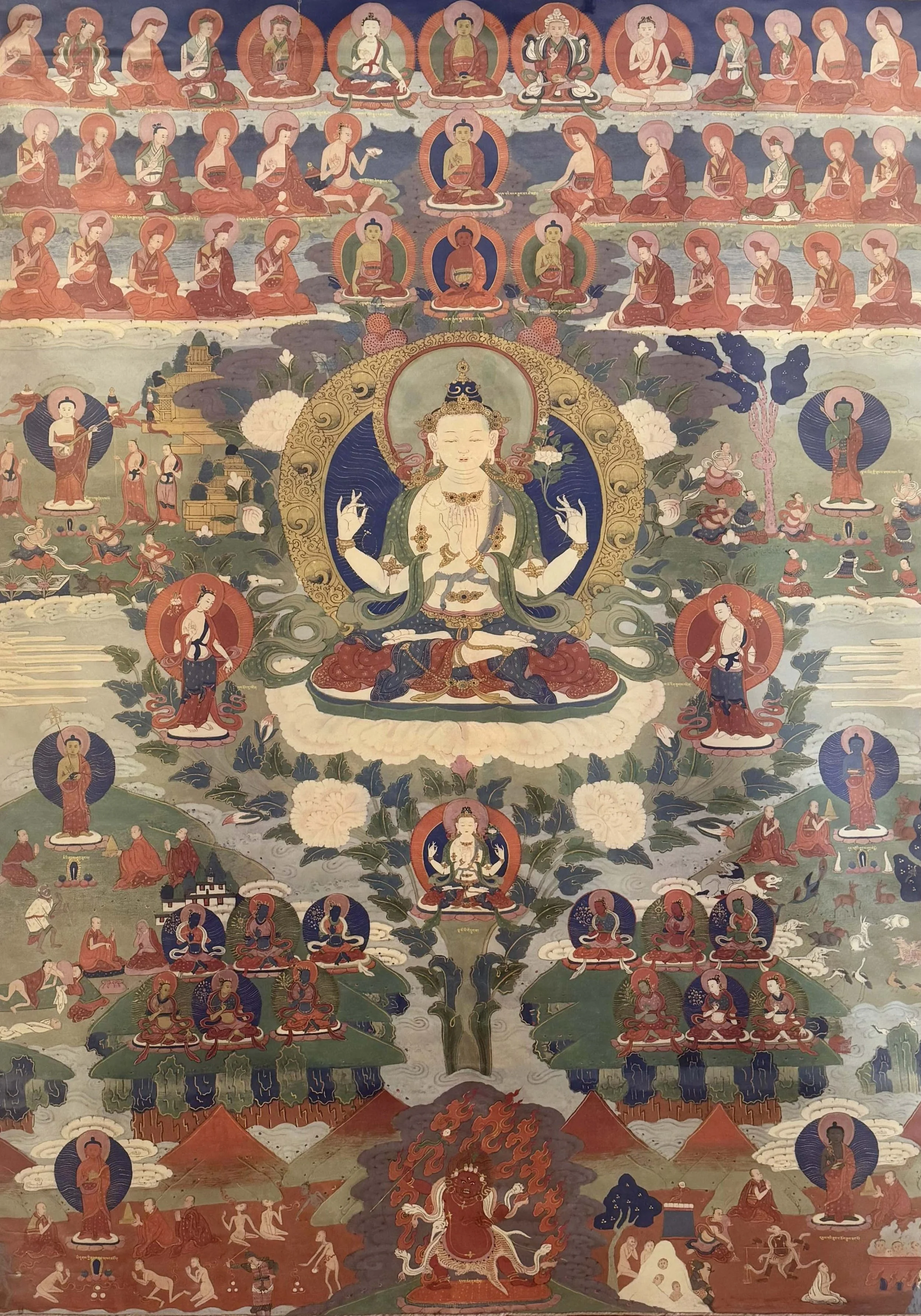
The Mani Drubchen is a very special mantra retreat that involves visualizing Chenrezig, the Buddha of Compassion and reciting the six syllable mantra (OM MANI PADME HUNG) as a method for generating profound love and compassion, purifying obscurations, and benefitting limitless sentient beings. Drubchens (Great Accomplishment Retreats) are said to be exceptionally powerful in assisting spiritual development and can yield the same results as years of solitary retreat.
History of Mani Kabum Treasure Tradition by Eric Fry-Miller
The Mani Kabum teachings were transmitted directly from Chenrezig to the King Songtsen Gampo (7th Century) and his retinue. These were later discovered by Padmasambhava (8th Century) and then rehidden. They were later revealed by three treasure discoverers: Drubtob Ngödrub, Nyang Ral Nyima Özer (1124-1192), and Shakya Ö. This particular secret mantra tradition and empowerment comes mainly from the earlier Mani Kabum Treasures revealed by Drubtob Ngödrub and his famous student Nyang Ral Nyima Özer. These were later condensed and arranged by Rigdzin Chökyi Dragpa (1595-1659), who set forth the empowerment, generation stage instructions, as well as the completion stage instructions in a way that would be accessible for future generations. This tradition includes the special and rare dzogchen energy of awareness empowerment (rigpai tsal wang), in which we are directly introduced to our own ultimate nature.
This empowerment and group practice introduce us to the main Chenrezig sadhana, where we cultivate love and compassion for all beings and the wisdom to free us all from cyclic existence. Later through this gateway to expand on our practice, this cycle also includes an incredible wealth of branch activities, Hayagriva and secret dakini practices, inner fire tummo and subtle energy guidance, luminosity of deep sleep, dream yoga, illusory body, phowa, bardo instructions, and much more. These instructions also include a unique set of five different types of nature of mind instructions that include meditating on the Ultimate Prajnaparamita, Mahamudra, Ten Dzogchen Realizations, Madhyamika, and the Ultimate Realization of Chenrezig. Through this incredible cycle, we are shown how to reveal the true nature of the Great Compassionate Chenrezig from within.
Schedule
Wednesday, November 11th, 9:00am - Sunday, November 15th 10:00am
Mani Drupchen Practice Retreat
Sunday, November 15th:
9:00am - 10:00am
Final Session and Tsok Celebration
10:00am - 3:30pm
1000 Armed Chenrezig Empowerment (with lunch break in between)
3:30pm - 4:00pm
Sand Mandala Dissolution
Timing on the final day may vary. The Mani Drupchen Retreat will end between 4:00 and 5:00 PM on Sunday, 11/15.
Important Notice Regarding Empowerment Timing
Just like last year, following Drupon Rinpoche's guidance, this year's empowerment ceremony will be held at the conclusion of the retreat rather than at the beginning. This change reflects a more traditional approach to Drubchen practice.
The intention behind this is profound: after several days of collective practice during the drubchen, our minds will be more purified and receptive. The accumulated merit and energy generated through our shared practice will create ideal conditions for receiving the full blessings of the empowerment.
This traditional sequencing allows participants to approach the empowerment with minds that have been properly prepared through sustained practice.
Additional notes concerning the Schedule
During the mani drupchen practice retreat, we will hold both daytime and nighttime sessions, with continuous chanting of the mani mantra beginning tuesday, september 23rd at 10am and continuing throughout the retreat. although this is a 24-hour retreat, you are warmly encouraged to attend at any time—day or night—as your schedule permits. if you’re able to commit to night sessions, we will include you in the rotating schedule for those hours. night sessions will be held in small groups practicing in 3 ½ hour intervals through the night.
We encourage you to attend as much or as little of the drupchen as your schedule allows.
Doors will remain open around the clock, and you are welcome to come and go as needed. your presence, in whatever form it takes, is a valuable contribution to the collective field of practice and blessings we create together.

Drupon Thinley Ningpo Rinpoche
Drupon Thinley Ningpo Rinpoche was born in 1962 into a nomadic family in the region of Nag-chu in Eastern Tibet at the height of the religious and cultural persecution of the Chinese Cultural Revolution. Following the death of Mao Zedong in 1976 and the subsequent Buddhist revival in Tibet, Drupon Rinpoche became inspired to devote his life to the spiritual path. He was thoroughly involved in the work of rebuilding the monastery in his local community, and in 1988 he went on a year-long pilgrimage, visiting holy places throughout Tibet. This journey culminated in his dramatic escape from Tibet, a perilous journey on foot across the Himalayas from Tibet to India. Once safely in India, he entered Janchubling Monastery in Dehradun where he studied Buddhist philosophy and served as a disciplinarian for six years. In 1996, he entered a rigorous period of solitary meditation and contemplation known as the traditional Three-Year Retreat. Soon after, he was given the title “Drupon” which means “master of spiritual attainment.”

Drupon Rinchen Dorje
Having great altruistic motivation from early childhood, Drupon Rinchen Dorje Rinpoche entered Tana Monastery in Tibet in 1984, where the numerous teachings he received included the Fivefold Path of Mahamudra and Chakrasamvara according to Drilbupa.
In 1993 he went to India, where in exile he joined the Drikung Kagyu Institute and received extensive instruction in Buddhist philosophy. He subsequently accomplished the ngondro practices of Mahamudra and the grand mantra recitation of Chakrasamvara and was initiated into the Profound Path of the Six Yogas of Naropa.
Drupon Rinpoche has completed six years of retreat, in Almora, India, and Lapchi, Nepal, the latter being one of Milarepa’s preferred retreat sites.

Venerable Lopön Kalsang
Venerable Lopön Kalsang received full monastic ordination in 1992 from Nubpa Rinpoche and Drubwang Rinpoche at Rinchen Ling Monastery in Nepal. He studied under and received transmission from many masters, including Nubpa Rinpoche, Gelong Tsongdru, Drubjang Konchog Norbu, Khenchen Konchog Gyaltshen Rinpoche and His Holiness Drikung Kyabgon Chetsang Rinpoche and received higher trainings in ritual practices at Jangchub Ling in India. In 2008 he completed the Shastri degree, which included higher training in Pramana, Madhyama, Abdhidharma, Prajnaparamita, Tanying, Gonchik, Uttaratantra, and Buddhist Ritual Tradition. In 2024 His Holiness Drikung Kyabgon Chetsang Rinpoche gave Lama Kalsang the title, Dorje Lopön, Vajra Master. Lama Kalsang is also an accomplished artist in traditional Tibetan ritual art.
Tsunma Rinchen Khandro
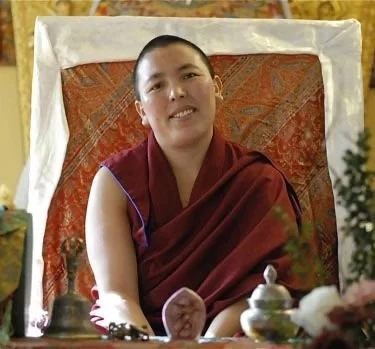
Before coming to the United States, Tsunma Rinchen Khandro resided at Samtenling Nunnery in India, where her years of practice helped shape her deep experience in meditation and solitary retreat. She brings a steady commitment to guiding students in meditation. In 2007, His Holiness Drikung Kyabgön Chetsang Rinpoche chose her to come to the United States and bestowed upon her the title “Khandro,” an honored Tibetan Buddhist title associated with feminine wisdom and spiritual accomplishment.

Virginia Blum
Virginia Blum is the resident translator at Drong Ngur Jangchubling Buddhist Center, and has been translating and interpreting the Dharma since 2006 assisting Buddhist teachers around the world. Virginia is fluent in both Tibetan and Spanish and has been engaged in Buddhist meditation and study since 1999. She has studied Tibetan language in a number of immersive programs, including a two-year translation training program at Songsten Library in Dehradun, India, the Tibetan Summer Intensive Training at Rangjung Yeshe in Kathmandu, Nepal, as well as the Tibetan Language Intensive Training Course at the University of Virginia.
Important Event Information
-
After clicking “Donate to Register,” you will be redirected to the Givebutter site where you can choose a donation amount and select either a one-time or monthly subscription option.
If you're using a mobile device, you’ll see a “Donate” button after being redirected—click that to proceed with your donation.
If you’re experiencing any issues or need assistance, please contact register@dnjus.org or support with registration or donation options.
-
We warmly invite you to give as generously as you are able. No one will be turned away for lack of funds. Your presence is valued far beyond your financial contribution. That being said, hosting these events involves significant costs texts, logistics, and offerings for our lamas and translators as well as the ongoing expenses of maintaining the center and sustaining its programs throughout the year. Your generosity makes all of this possible, and it is through your kindness and support that the Dharma continues to flourish here. Any amount you are able to contribute is deeply appreciated.
-
Supreme Benefactor Level: $1000
Vajra Family Level: $800
Ratna Family Level: $500
Lotus Family Level: $300
Karma Family Level: $200
Daily Drop in Rate: $50
-
Breakfast, snacks, tea, and coffee will be provided for all retreat participants. Lunch and dinner are provided based on registration. (Pre-registration is required)
-
Please contact us if you need lodging info@dnjus.org
-